
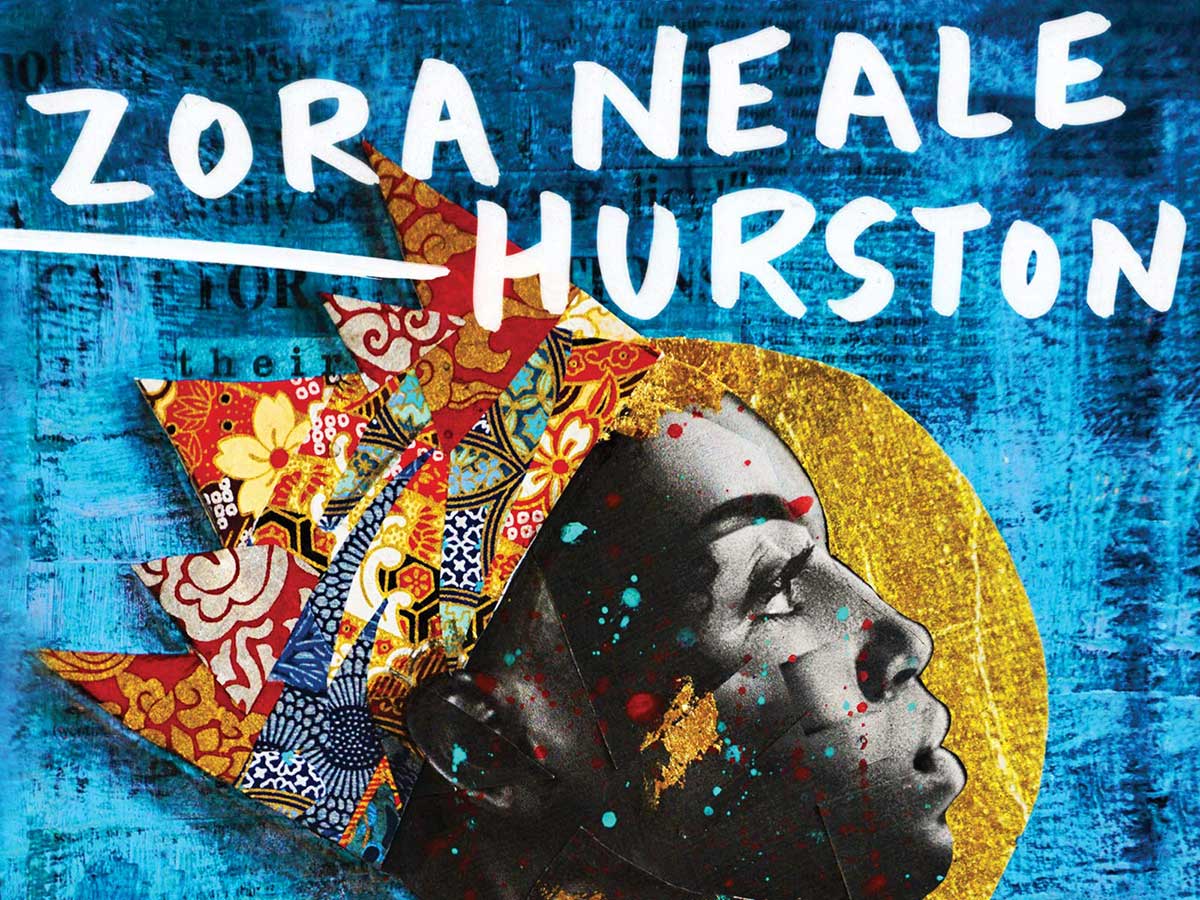
Their Eyes Were Watching God (Zora Neale Hurston)
A true Bildungsroman, (story of personal growth of a main character), Their Eyes Were Watching God has come in for censorship and sometimes harsh criticism from some perhaps surprising sources. Published in 1937 by an African American woman, the book has faced down its issues and is now considered a staple of feminist reading and required high school reading.
Janie, the African American protagonist, frames her tale of maturation as a narrative she relates to her friend, Pheoby, upon her return to her home in Eatonville, Florida, an all-black town.
As a young girl, Janie has an epiphany of sorts about what love really should be. That vision is repressed, first by her grandmother, then by her first two husbands. She finally finds what she believes she’s always wanted, when she marries a man twelve years her junior.
The book has been denounced by some African American readers as pandering to the white stereotyping of black people, citing Hurston’s use of idiom in her characters’ dialogue. The claim is that this reinforces the idea of a lack of education among all black Americans of that time period. Hurston actually remains true to her study of anthropology in faithfully using the idiom of that time and place, for her characters.
Students have complained the idiom is hard to translate (into their own idiom, one supposes wryly), and that Janie should not be considered a feminist icon, citing her overlooking being beaten by the love of her life.
Never miss a thing with our FREE weekly newsletter.

Predictably, a parent here and a school committee member there have, over the years, complained of sexual explicitness in the story, though there are no graphic scenes and only oblique references to sexual topics.
While I understand one or two of the objections, I primarily see this as a tale of one woman persistently refusing to give up her dream of what love should be. After a truly catastrophic ending to her only happy relationship, she returns home to her gossipy neighbors, tells her one friend her story, and is portrayed as a woman now at peace, having realized her vision.
I highly recommend Their Eyes Were Watching God, for the reader who likes stories with complex characters, themes, and debatable questions.
That seems like life itself to me.
