
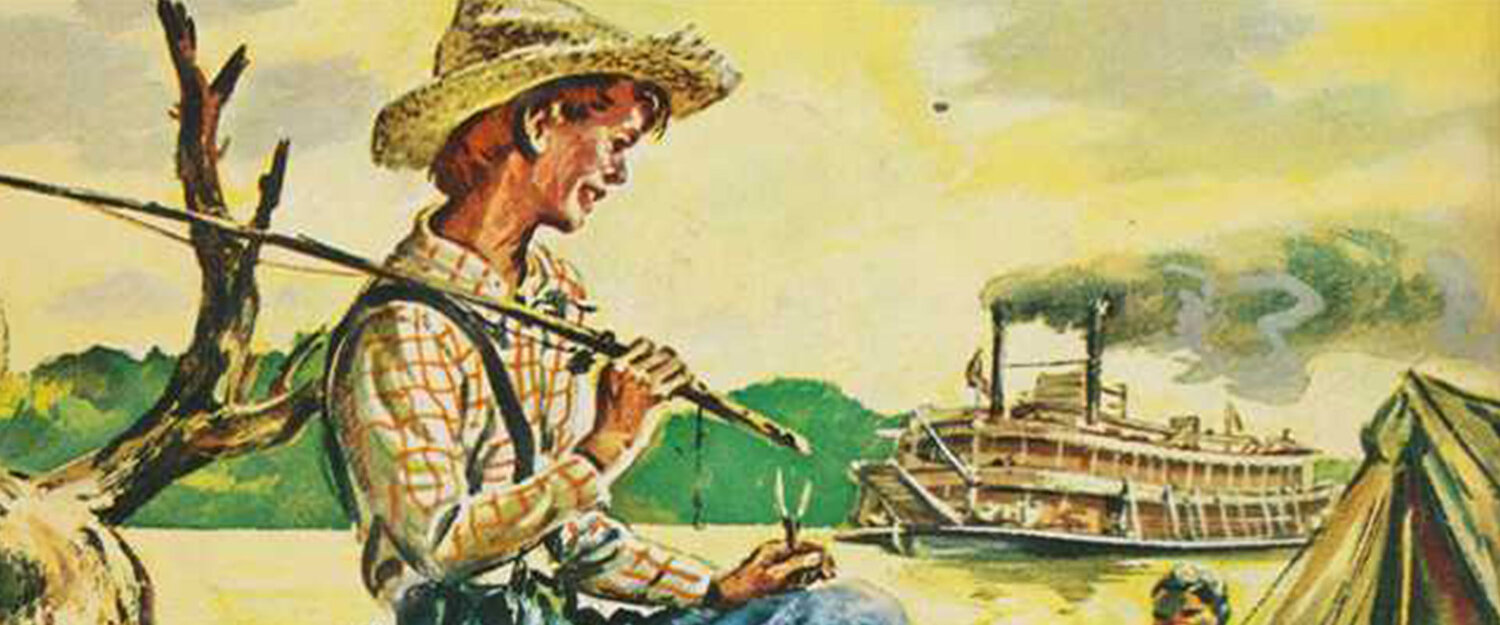
This title, written by Mark Twain, is an early-publication-date banned book; first available in 1885, by one month later, it had been banned by, of all people, librarians, who decried it as “coarse” and “trash.”
The protagonist, Huck, experiences extreme discomfort and annoyance at the strictures of “polite society,” so we eventually find him rafting the Mississippi River with the runaway slave, Jim.
What follows is a series of adventures, misadventures, and close calls; through Huck’s eyes, we are introduced to villains and heroes of varying degrees. We experience the “real world” along with early-adolescence Huck. The discerning reader will quickly see that, sadly, not much has changed in the ensuing 140 years or so.
Those long-ago censorious librarians had another problem: the question as to whether or not Huck ever “learns his lesson.” My contention is that Mark Twain, with perhaps a big grin, would declare that his protagonist had learned exactly what the author had intended all along. The story is perhaps best understood as a polemic on conformity, on societal norms, and on elitism in its various, sometimes surprising, forms.
In today’s book-banning climate, this one does not ring the bells of sexual explicitness nor any perceived deviance from any perceived norm. What remains, then?
Race. Racism rears its head as book-banners react to the use of racial epithets; the outcry at a white child and a black adult male living and adventuring together; at the resentment of a runaway slave being portrayed as more sinned-against than sinning.
This book used to be required reading for students of adolescent years; like many similarly-assigned titles, I believe it is best understood by a mature adult with some life experience behind her. Fifteen-year-old Renee had a very different opinion and understanding of this book from the way I understand it today, a half-century later.
I recommend Huckleberry Finn to anyone who enjoys Reconstruction-era fiction; southern historical fiction; gently humorous comedy-of-manners fiction; or the works of Mark Twain.
