When we think of great cities, we often think of buildings. Buildings are, of course, important, whether the iconic ones (Chicago’s Sears Tower, New York’s Empire State Building) or the skyline as a whole. But great cities also have two other features: water and parks. Winchester has both of these, but we have people in town who are imagining better for both.

Stephen Berry, in the Clark County GIS office, has been leading a walk-bike strategy group. Despite his basement office, his vision for Winchester doesn’t simply include more parks, but more connections between parks, between neighborhoods, and even between counties (connecting the Brighton Trail across the Bypass and across neighborhoods divided by streams and subdivisions).
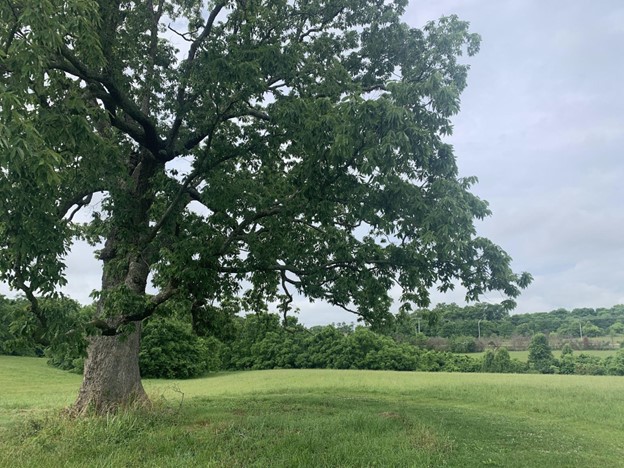
Beth Willett Jones and others at Greater Clark Foundation have created monarch waystations at the Traveling Trail. Monarch butterflies, which migrate in multigenerational tag teams from Mexican forests to U.S. and Canadian fields, feed on milkweed plants, which are now preserved from mowing and marked with signs (see photos.)
Deborah Jackson and others with Legacy Grove, a privately owned public park that most people know for its playground and dog park, have partnered with the University of Kentucky to create a pollinator and bird habitat tucked between neighborhoods and I‑64. Like the Traveling Trail, Legacy Grove also features a wetland that protects nearby neighborhoods from flooding and helps keep stormwater cleaner.
We can do more. Where is Town Branch visible, and where could it be featured in our flood-prone downtown? How can our downtown roofs be used for solar energy and green roofs?
My wish for you, beloved Winchesterians, is to find your cause — your parks, your routes, your waterways — and help enrich Winchester by improving and connecting these resources so your pet causes can become public goods.