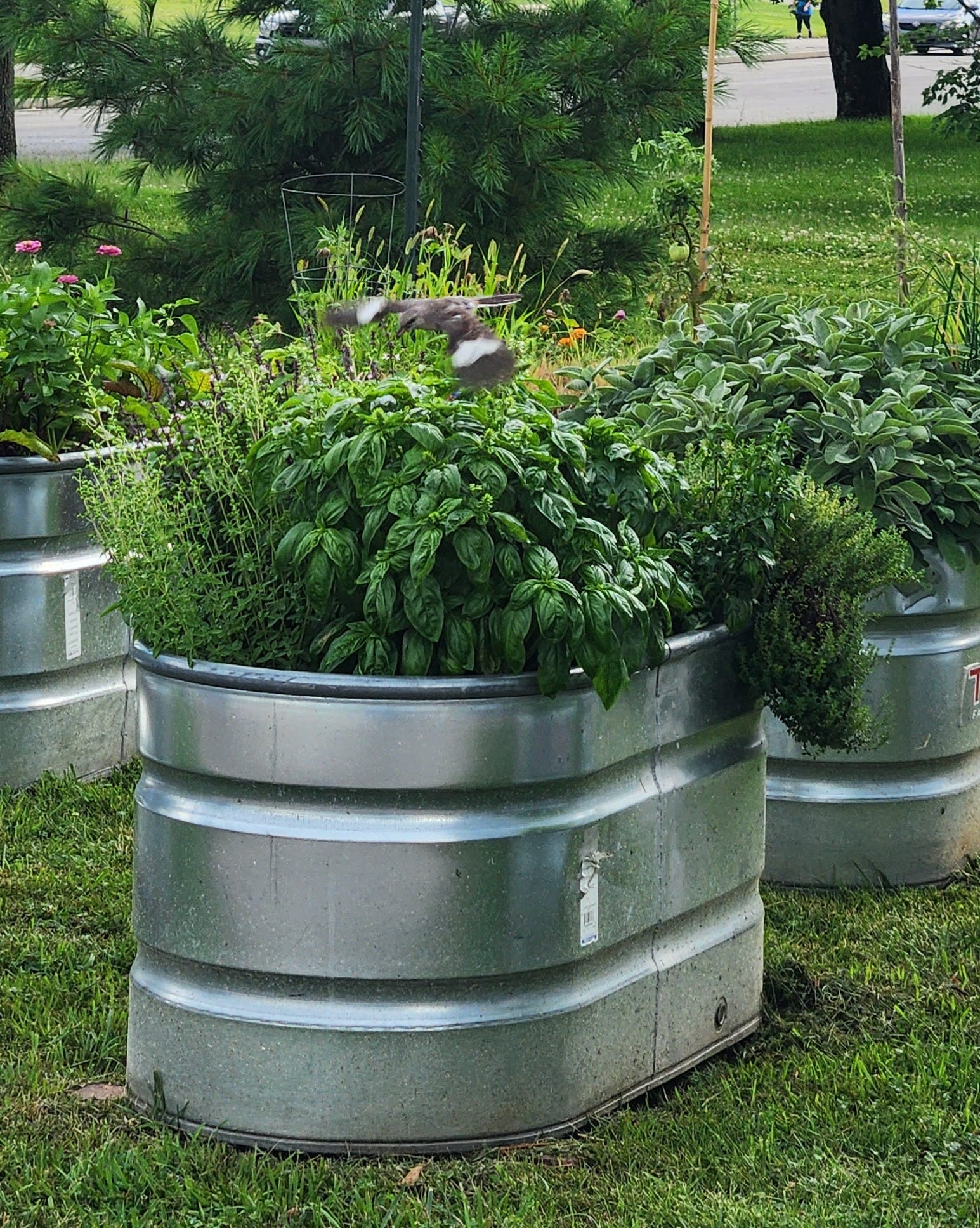
I’ve been watching birds lately—not birding—just bird watching. Instead of an intensive study of flashcards and a deep dive into field guides, I’ve just been watching them. I often don’t know the name of the species, whether they’re migrating or residents, and I certainly don’t have an ear for their songs. But, who better to tell me about who a bird is? The being or a book?
Well, it’s both—ha!
A bird book is filled with cumulative observations made by humans with a certain amount of familiarly and expertise, and I can lean on that knowledge to fast-track my understanding. So, of course, there is certainly a time and place for academic knowledge, but there is also a place for a relational one. I often find that looking at a book and knowing a “name” decontextualizes the moment and therefore the connection and opportunity before me. I see a bird, take a photo, and upload the picture to MerlinID and I instantly know the name of the species (briefly if we’re being honest). But the price I have paid for that instant is being taken completely out of the moment. Did I have a chance to admire how the bird flew? Was it exuberant or graceful? Was there joy? Purpose? Play?

Naming is a very specific way humans in Western culture relate with the world around them. In my career as a nature and science educator, I’ve found again and again people will automatically deny themselves a relationship with a bird, plant, etc. even before they give themselves a chance, just because they don’t know their name. There is a stigma around nescience, or a lack of knowledge, which produces a lot of feelings of shame in generalized American culture, to the point they will deny themselves curiosity and learning.
But I’m here to tell you that you don’t need to know the name of an animal in order to connect with them. The naming of an animal is specifically related to one human way of communicating, and speaks nothing about the relational dynamic of between the human and the non-human world.

I’ve spent a long time getting to know plants and have even adopted the title “Plant Person.” Needless to say, I know a lot of different plants. So when I wanted to know birds, I approached the task the same way I learned about plants: just a repetition of noticing and developing relationship with the plants that I see over the passage of time.
She is the tallest tree in the yard, I see her every day when I go to work. She has silvery paper bark that peels away. Her leaves are large and pointed. Oh, some leaves have three points and some have five. I walk with a friend underneath this tree and she shares with me, “Sycamore.” And the more often I see Sycamore, I notice other things, like the fluffy seed pods that burst when I step on them, and in the winter the tops of the branches still have hardened clinging seed pods dangling from the bare branches.
When I’m at a distance in winter I can recognize some of the seed pods she hasn’t released yet and from there I notice Sycamore’s branches twist and arc in a certain way. I know I have the right tree, because she is the tallest tree in the yard. I meet her elsewhere. I see she loves the waters edge when I float down the Elkhorn River. When I notice the scattering of tawny fluff on a lawn I know when I look up, there she will be. I can now even discern the yellow-green of her leaves from all the other plants when zooming down the interstate.
This was my approach to learning to identify birds. But the funny thing is that unlike plants, birds aren’t stationary so it’s not about watching a plant through years of seasons. With birds, there is a fleeting instant, a snatch of a song, a brief silhouette in the sky. So for now, I’ve been watching birds. They’ve been interesting this year in particular because of the Brood XIV cicada emergence. I’ve witnessed very impressive, single-minded bird acrobatics chasing the admittedly dopey, guileless cicadas.
(As an aside, it is very clear the Brood XIV survival strategy is a communal, en masse philosophy: the safety of the species is in numbers. No self preservation whatsoever because they’re just the friendliest little guys I’ve ever met.)
Never miss a thing with our FREE weekly newsletter.
I say the birds were very single-minded because I noticed a lot more dead birds on the road. My hypothesis is they were hit by cars in their focused hunting flight.
I’ve also watched birds with others and had a bird date with one of my dearest friends (the same who named Sycamore for me). We joined the Lexington Bird Cult on a walk at the University of Kentucky Arboretum and then visited the “Charlie Harper: Birds and Beasts” exhibit at the Headley-Whitney Museum of Art. That was the day I learned that Indigo Bunting sings at the tops of trees and that cardinal partners will pass gifts of food between them as a courting ritual.

Honestly, I don’t remember any other facts from that day, but I remember the way the Bird Cult murmurated around the arboretum and that makes me laugh. After gathering at the appointed spot and brief introductions we took off together on the path, sticking together and pointing out any birds we saw. But as we walked for longer, our group stretched and broke off, lingering to look at the tops of trees or forging ahead to find what awaited around the corner. But, we always managed to group together again to share what we saw and to point out particularly interesting or rare sightings. That happened many times during the walk, just a bunch of birders and bird watchers, behaving like a flock.
I don’t know what that means yet, or even if it needs to have a deeper meaning. I’m content with privilege of seeing and not knowing, just watching.