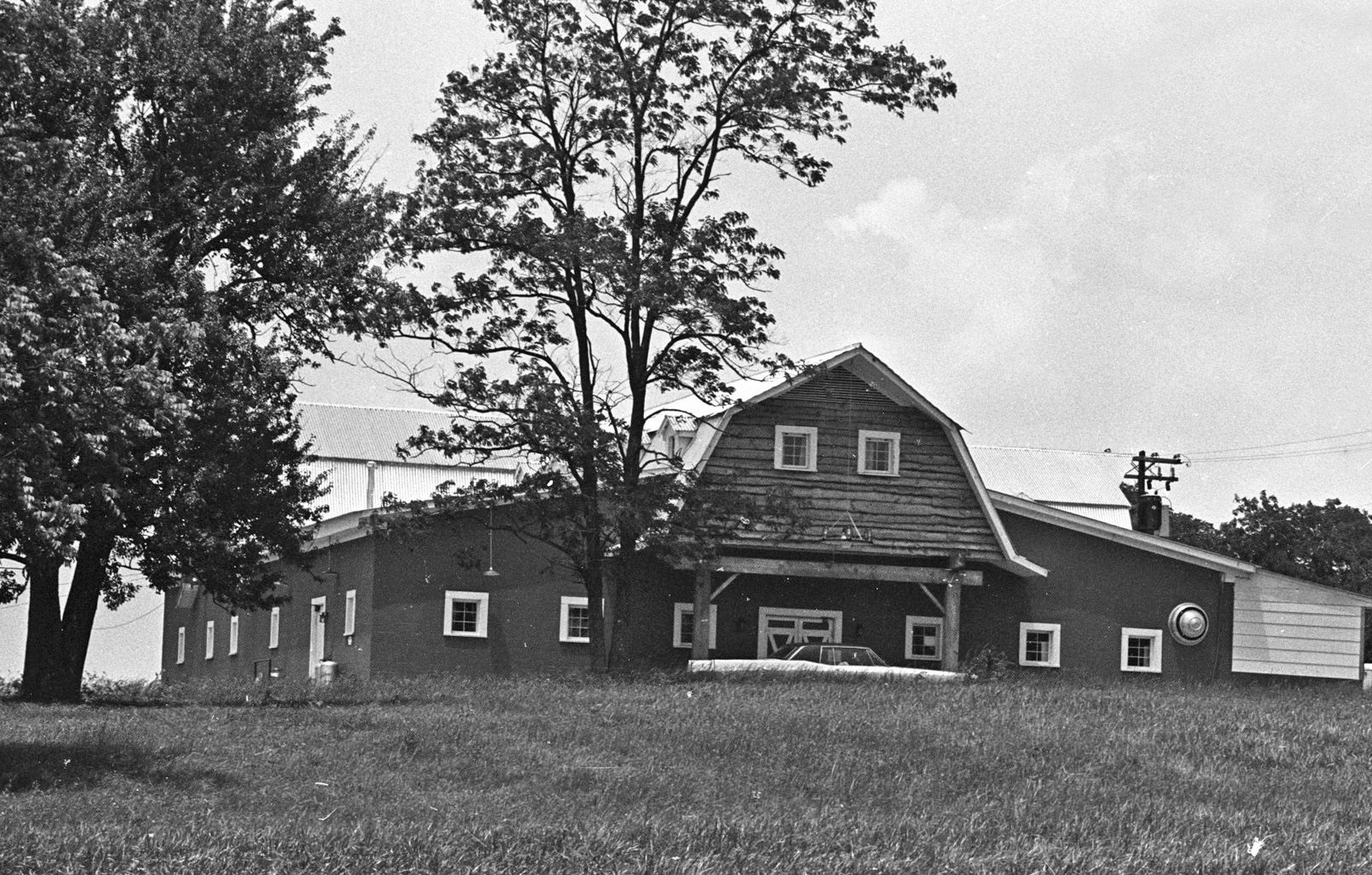
Though it closed after less than a decade, the Barn Dinner Theatre on Venable Road enjoyed incredible success in its early years. The concept of a gourmet dinner and a Broadway show for one low price caught on in the 1960s. It was the brainchild of Howard D. Wolfe and Conley Jones who opened their first dinner theater in 1961 in Richmond, Virginia. The Barn Dinner Theatre franchise eventually grew to twenty-seven theaters.
Each theater featured Wolfe’s barn design and farm-themed decorations. The plays employed a theater-in-the-round concept with tiered seating that provided all patrons with a good view of the stage. Another Wolfe innovation was what he called the “Magic Stage.” Plays were performed on a platform lowered from the ceiling on cables. The stage could then be raised back to the ceiling to set up the next scene, a process that took less than a minute.
Wolfe had a studio in New York City where all his productions were staged with a select cast of actors. The plays were then sent out to one of the theaters, where they performed for four weeks before moving on to the next theater. Actors boarded in rooms above the theater. It was typical for actors to wait tables for tips before performances.
Winchester had the first Barn Dinner Theatre in Kentucky. It was located to serve the Lexington area and surrounding communities. The owners—local men Dr. Robert Brashear, Arnold W. Zopfi Jr. and Scott Talbott—incorporated as the Blue Grass Corporation and acquired ten acres on Venable Road for the theater. Groundbreaking took place in March 1968. A mere five months later, an audience of some 350 turned out for opening night.

According to Bob Tabor, the dinner theater required several things for success. “If Neil Simon didn’t write it or they didn’t sing it, they couldn’t sell it.” That formula was followed in early performances. The theater opened with a musical, “The Boy Friend,” for its first play. They followed that with “Barefoot in the Park,” a Neil Simon comedy. Bob recalled that one of the actors who performed here attained later success: Mark La Mura (1948−2017) starred in the television soap opera “All My Children,” playing Mark Dalton for eleven years.
The price for dinner and a show was five dollars—a bargain for a night of entertainment. Thirteen different plays were performed each year. Dinner was at 7 p.m. and curtain time at 8:30. They did not serve alcohol but had a bring-your-own-bottle policy typical of the times. The theater enjoyed good attendance, especially from Lexington. Actors were often interviewed by Lexington television personalities, Sue Wylie and June Rollins, and new plays usually merited a review in the Winchester Sun.
Following their success in Winchester, the Blue Grass Corporation (Dr. Blanton and Arnold Zopfi) opened another theater in Louisville. Unfortunately, in the early seventies, attendance began to fall and the theaters had trouble meeting obligations. The first blow came from a lawsuit for $100,000 filed by the parent company in Virginia for failure to pay royalties.
Never miss a thing with our FREE weekly newsletter.
In 1974, in an effort to increase revenues, the corporation applied for a beer and liquor license. The problems continued, however. While Friday and Saturday nights saw good attendance, weekday numbers fell off. More lawsuits followed from food vendors who had not been paid.

The Winchester theater finally gave up the ghost in 1976. The last production, “Not With My Daughter,” closed that May. The owners sold the property to Charlie Brown’s of Winchester, an offshoot of the well-known Lexington establishment. After extensive remodeling, the bar and restaurant opened in October 1977, only to be destroyed by fire the following January.
I interviewed Bob Baldwin for this story. He thought the liquor license might have led to the downfall of the theater here. Under the BYOB policy, patrons could enjoy a cheap meal and play accompanied by their own supply of liquor. The theater even supplied the mixers. When bar sales began, no outside beverages could be brought in. Customers fond of their libations saw the cost of a night’s entertainment shoot up.
The 1970s was the heyday of dinner theaters around the country. The numbers peaked at 147 in 1976. Those numbers have been reduced to single digits today. One of those still around is The Barn in Greensboro, North Carolina, one of the original Barn Dinner Theatres. Many reasons have been offered for the decline. The unionization of theater companies for one, and the difficulty of successfully managing a theater, restaurant and bar for another. Another factor was the tremendous growth in other forms of entertainment. Whatever the reason, we can say “It was great while it lasted.”
Thanks to Bob Tabor, a former Barn Dinner Theatre employee, for help with article. And the same to Bob Baldwin; Bob and his wife Boo saw almost every performance at the theater.